
I Wish I Was a Girl: Counting Crows and Clarity

15th May 2017 | Bradley Copper.

The patriarchal trope of using a woman in order to explain some woeful truth about a man is of course a damagingly old one. This sexist setup, in which women are one-dimensionally portrayed so as to help a speaker come to some conclusion about himself or his world, while never honouring their experience, is a genric cornerstone that remains in so much literature to the present day. American rock band Counting Crows adopt a version of this trope in constructing femaleness or womanness—the songs are predictably not definitionally specific on this point—as a signifier of clarity. The band’s frontman and lyricist Adam Duritz imagines the women characters in his songs as being able to speak directly about their emotions in a way that he as a man cannot.


Read Article →

The Siren’s Call: Mica Levi’s Soundscapes of Alien Femininity

Katie Goh | 15 May 2017

Under the Skin (Jonathan Glazer, 2014) opens with a bright white light shining into the audience, which then morphs into an eye over the span of five minutes, accompanied by a crescendo of buzzing violins. The opening is disturbing and abstract, setting the tone for the film’s sonic and visual imagery and for the alien language created by Mica Levi’s soundscape.

Mica Levi’s second film score was for Jackie (2016), Pablo Lerrain’s biopic of America’s most famous widow, first lady Jacqueline Kennedy. The film chronicles Jackie’s response to the aftermath of her husband’s assassination as she simultaneously processes her personal grief and works to mythologize her husband’s legacy. Both Lerrain and Glazer’s films are about alien femininity: whereas Under the Skin centres on a literal alien playing as woman, Jackie follows an alienated woman.

Read Article →

Malory Revisited; or the Enduring Appeal of Malory’s Le Morte Darthur

Emanuela Militello | 15 May 2017

King Arthur and the Round Table probably call to mind tales of heroism, adultery (perhaps the infamous affair between Sir Lancelot and Guenivere), and knights in shining armour, riding on their trusty steeds to the rescue of some damsel in distress—and as a depiction of a genre, that is all well and good. After all, most knights in the Arthurian cycle engage in incredible feats of arms and prove their honour in the service of a lady. In this short piece I want to draw your attention to the book that established many of the characteristics of the legend for modern audiences: Le Morte Darthur—the compendium of Arthurian legend in eight episodes, written by Sir Thomas Malory in the 15th century—and to the potential that this version of the Arthurian cycle still has to touch readers with its powerful emotional appeal that goes beyond the glamour of chivalric adventures.

Read Article →

A Few Reasons Why Not

Maria Elena Torres-Quevedo | 1 May 2017

[tw: discussions of suicide and rape]

Netflix’ recent series, 13 Reasons Why, has been subject to a wide chasm in reception. The story follows a teenage boy, Clay, as he listens to the tapes left by his friend and love interest Hannah, detailing the 13 reasons why she committed suicide. The show depicts Hannah’s fights with friends, her parents’ financial troubles, her experiences of bullying, misogyny, and rape by fellow students, and, very graphically, her suicide. Given this wide chasm, what are some of the main critiques of the show and what problems does it engender?

Read Article →

Rap au féminin: What can France’s female hip hop scene teach us about identity politics?

Ellen Davis-Walker | 25 April 2017

Mathieu Kassovitz’s 1995 box office sensation La Haine has long been credited with propelling French hip hop on to the global stage. Drawing on original material by Ministère AMER, NTM and MC Solaar, the film’s soundtrack managed to capture the sonic traces of social unrest on the fringes of French society. Whilst France’s victory in the 1997 FIFA World Cup seemed to mark a momentary coming- together around the inclusive slogan ‘Black-Blanc-Beur’ (Black, White, Arab), the contentious and fractured question of national identity has continued to dominate the country’s musical and political landscape ever since.

The emergence of rap au féminin (female rap) over the past decade marked a significant step in the development of multi-faceted ‘French’ identity. While anglophone female artists of the early 2000s were predominantly focused on debunking “the sexual and material objectification faced by women in the industry,” this article will ask how rap au féminin has offered artists the possibility to explore both what it meant to be a woman in this period, and what it meant (and still means) to be French.

Read Article →

LLC Blethers Video Presentations 2017: You Oughta Know

LLC Blethers is a night of academic storytelling talking about any and everything students in the school of Literatures, Languages, and Cultures want to have a blether on about (in case you don’t know, at it’s simplest definition, blether is a Scots word for a chat). To help give the event a little something extra, all the presentations are given in the PechaKucha style, that is, they are done using slides that contain only (or at least predominantly) one image each. There are 20 slides allowed, and each slide is on screen for 20 seconds. We have collected together the videos from the 2017 Blethers event so you can watch them all!

Titles and presenters are:
- Amateur Psychopathy 101, or: How to Tell if your President is a Psychopath (Vicki Madden)
- Field Work: From Crooks to Books (Angus Sutherland)
- How Not to Organize a Conference: A 6-Minute Masterclass (Harriet MacMillan and Anahit Behrooz)
- I Was a Teenage Film Geek (Heather Thomson)
- My Personal Trial: A Night at the Theatre (Gina Maya)
- Picture Books for Grown-Ups: A History of Illustration in Four Books (Tess Goodman)
- Project Myopia: Crowdsourcing a Diverse Curriculum (Rianna Walcott)
- The Merits of Weird PhD Topics (Juliet Conway)
- Who Let the Vlogs Out? (Aran Ward Sell)

Read Article →

Hollywood: Shell without Ghost

Erden Göktepe | 18th April 2017.

I must be honest, I had high hopes for the 2017 remake of Ghost in the Shell directed by Rupert Sanders and starring Scarlett Johansson as Major, the female protagonist, perhaps even for seeing something as intriguing as the original manga story and anime. Sadly, at the end of it, I simply felt indifferent and bored. Apparently, Hollywood has taken another well-written story with a phenomenal potential for audience impact and turned it into a breezy action movie….

Read Article →

The Paper Chase: Why My Piece of Paper isn’t Just a Piece of Paper

Maygan Eugenie Forbes | 18 April 2017

I recently came across an article on Forbes.com that told the story of a contributor, Neil Patel, who has deep regrets over pursuing his degree. In this article Patel writes: “Don’t listen to them! It’s not worth it…college was a waste of time, a waste of energy, a waste of money, and a waste of potential.” He then goes on to give a small description of his degree, and his early ambition to become an entrepreneur (which, according to Patel, is a job title that does not require a degree). He then proceeds to list a set of substantial degrees that he believes to be worth the time, energy, and money of a degree. For the sake of my word count I won’t write out the list, but I can tell you now, as a Film Studies MSc student, I don’t make the grade according to Patel. Everybody’s different but without a doubt, every degree counts. But is the question here less about the value of a degree and more about a void in cultural experience? Are we missing out on great wonders, wasting our limited time by being a servant to educational institutions, regardless of what degree we are pursuing?

Read Article →

Fogging Lit Crit: Tale of Two Critics

Kate Lewis Hood and Niki Holzapfel | 3 April 2017.

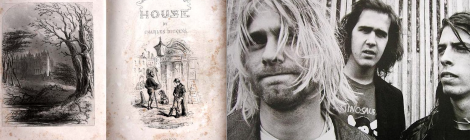
Fog everywhere. Fog up the river, where it flows among green aits and meadows; fog down the river, where it rolls defiled among the tiers of shipping and the waterside pollutions of a great (and dirty) city. Fog on the Essex marshes, fog on the Kentish heights. Fog creeping into the cabooses of collier-brigs; fog lying out on the yards and hovering in the rigging of great ships; fog drooping on the gunwales of barges and small boats. Fog in the eyes and throats of ancient Greenwich pensioners, wheezing by the firesides of their wards; fog in the stem and bowl of the afternoon pipe of the wrathful skipper, down in his close cabin; fog cruelly pinching the toes and fingers of his shivering little ‘prentice boy on deck. Chance people on the bridges peeping over the parapets into a nether sky of fog, with fog all round them, as if they were up in a balloon and hanging in the misty clouds.

Read Article →

Toilet Block

Gina Maya | 3 April 2017.

Bears do it in the woods, they say, but Westerners do it as God ordained it, in a room labelled male or female. Never mind that gender-segregated toilets appeared not in Biblical times but the Victorian age; the issue of public toilets is becoming one of the touchstones of our post-Brexit, post-Trump age, regarding who goes where, and whether or not trans- or non-binary-identifying people count as legitimate.

Read Article →